
The Community Bathhouse at Alora Ecovillage
One of the most practical and community-centered structures envisioned for Alora Ecovillage was the shared bathhouse. Designed to serve both functional and social purposes, the bath house reflected many of the core principles behind the larger Alora vision: sustainability, simplicity, cooperation, ecological responsibility, and human connection.
Rather than every residence requiring large individual plumbing systems and water-heating infrastructure, the idea behind the community bathhouse was to create an efficient shared facility built from natural materials and powered primarily through renewable energy sources. In many ways, it represented an older village-centered model of community life adapted to modern ecological values.
The bathhouse was not intended to feel institutional or industrial. Instead, it was imagined as a warm, beautiful, handcrafted space integrated into the natural landscape of the village itself.
A Sustainable Approach to Everyday Living
At Alora Ecovillage, sustainability was always intended to go beyond simply adding solar panels to conventional modern lifestyles. The broader goal was to rethink how communities organize daily life in ways that reduce waste while increasing quality of life and social connection.
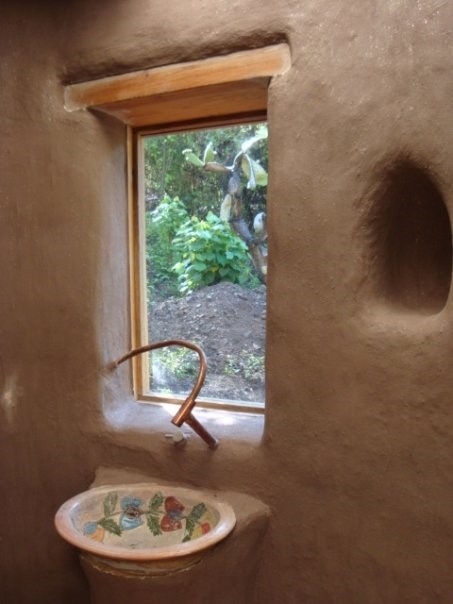
The shared bathhouse fit naturally into that philosophy.
By creating a central bathing and wellness structure, the community could dramatically reduce duplicated infrastructure, lower overall water and energy use, and simplify maintenance systems. Shared resources are often far more efficient than dozens of separate systems spread across individual homes, especially in an off-grid environment where energy conservation matters.
At least two showers were planned for the bathhouse, along with a communal hot tub designed for relaxation, conversation, and recovery after long days working in gardens, workshops, trails, or community projects.
The structure itself was envisioned as a peaceful retreat space rather than merely a utility building.
Built from Natural and Sustainable Materials
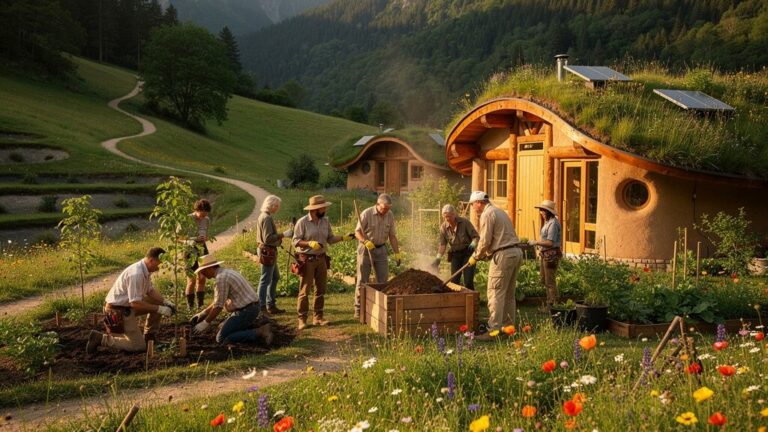
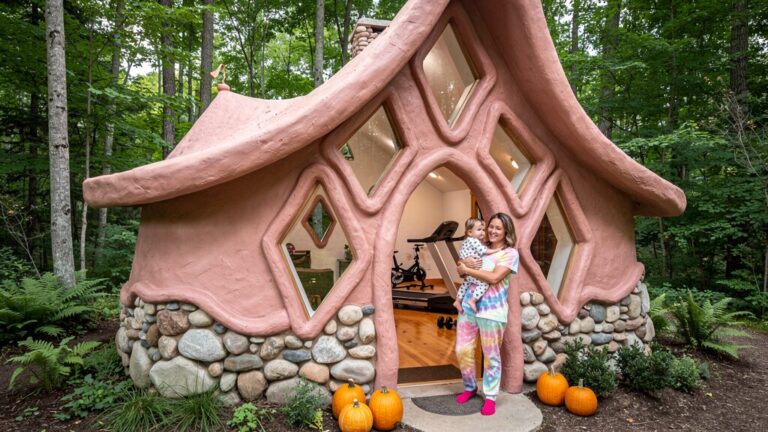
The bathhouse was intended to be constructed primarily from sustainable natural building materials that blended harmoniously with the surrounding environment. Possible materials included reclaimed wood, natural stone, clay plasters, timber framing, earthen floors, and other low-impact building methods commonly associated with ecological architecture and permaculture design.
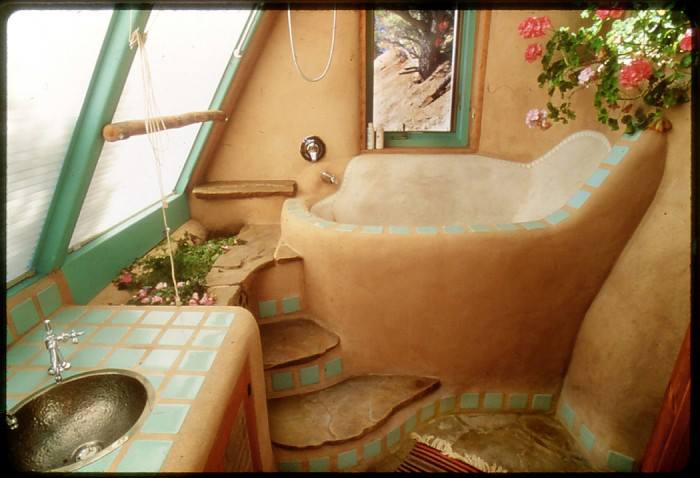
Rather than relying heavily on synthetic materials, the structure would have emphasized warmth, texture, and craftsmanship. Exposed wooden beams, stone pathways, natural lighting, and handcrafted details would have created an atmosphere closer to a rustic mountain lodge or woodland retreat than a conventional public facility.
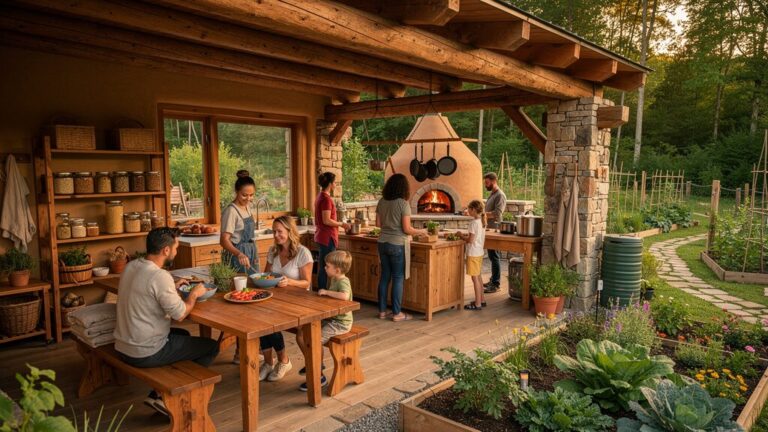
Large windows and passive solar design principles would have helped regulate temperature naturally while allowing views of surrounding gardens, trees, and walking trails. Outdoor seating and sheltered gathering spaces around the building would encourage residents to linger and socialize before or after bathing.
The goal was to make the bathhouse itself part of the overall beauty and identity of Alora Ecovillage.
Solar Heating in Summer, Rocket Stove Heat in Winter
One of the most innovative aspects of the planned bathhouse was its seasonal renewable heating system. During warmer months, solar thermal systems would have provided most of the hot water needed for showers and the communal hot tub. Solar water heating is one of the most efficient and practical renewable technologies available, especially for communities focused on reducing dependence on fossil fuels.
In winter months, when solar production becomes less reliable, the system would have transitioned to a wood-fired rocket stove heating system.
Rocket stoves are highly efficient wood-burning systems designed to maximize heat output while minimizing fuel consumption and smoke production. Unlike conventional wood stoves that can waste significant energy, rocket stoves burn fuel at extremely high temperatures, producing cleaner combustion and requiring far less wood.
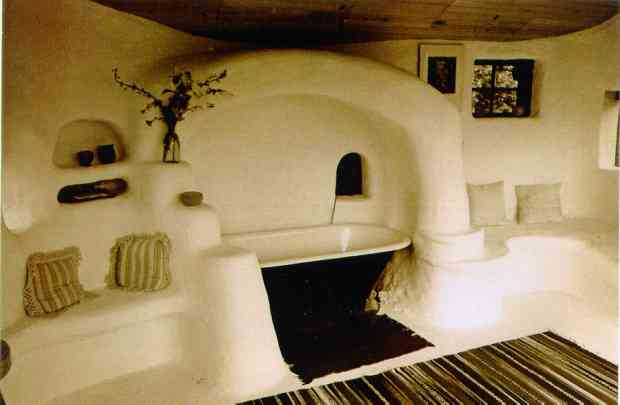
For Alora Ecovillage, this combination of solar heating and rocket stove technology represented the kind of practical, low-tech sustainability that the project consistently emphasized. Rather than relying entirely on expensive industrial systems, the community sought resilient solutions that balanced ecological responsibility with simplicity and long-term durability.
The wood used for winter heating could potentially have been sourced sustainably from managed woodland areas, fallen timber, or ecological forest maintenance practices within the community itself.
More Than a Utility Building
While the bathhouse certainly served practical needs, it was also intended to support community well-being in less obvious ways.
Communal bathing traditions have existed throughout human history in cultures all over the world. Shared bath spaces often become places of conversation, reflection, relaxation, and social bonding. In a society where people are increasingly isolated and disconnected, the Alora bath house was envisioned as one small way to restore some of that communal experience.
The hot tub area, especially, was imagined as a gathering place where residents could unwind after workdays, discuss projects, share stories, or simply spend quiet time together beneath the stars.
The structure also aligned with Alora’s broader philosophy that sustainable living should not feel harsh, joyless, or deprived. Ecological responsibility and personal comfort were not seen as opposites. The bathhouse represented the belief that simplicity, beauty, and sustainability can coexist naturally.
The Bath House as Part of the Larger Alora Vision
Like many elements of Alora Ecovillage, the community bathhouse was designed not only for efficiency but for quality of life. It reflected a different way of imagining modern community living where people shared resources thoughtfully, reduced environmental impact, and created spaces that encouraged both practical cooperation and meaningful human interaction.
Although Alora Ecovillage itself was never fully realized, the vision behind the bathhouse continues to represent the larger ideals of the project: ecological stewardship, creative design, cooperative living, and the possibility of building communities more connected to both nature and one another.
Share your thoughts in the comments below!
Do you share our vision of an intentional community based on the arts? What do you think it would take to achieve critical mass for such a community? Contact us and let us know!