
Bramble and Bean Cafe
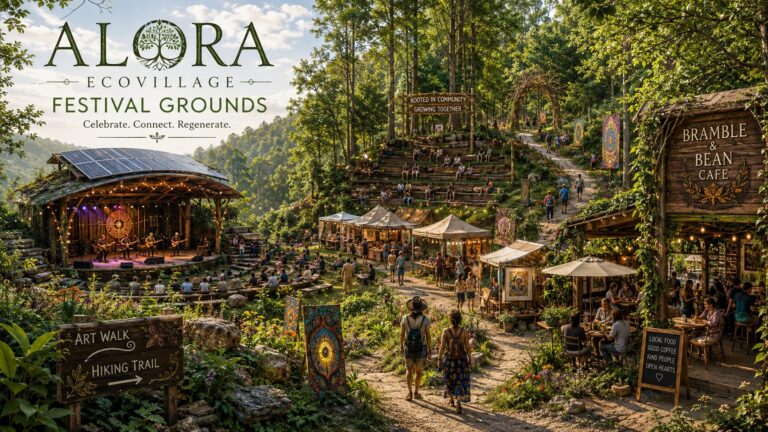
Among the many gathering spaces envisioned for Alora Ecovillage, few captured the spirit of the community more fully than the Bramble and Bean Cafe. Designed as a warm and welcoming social hub nestled within the heart of the village, the café would have combined sustainability, creativity, locally sourced food, and live performance into a single shared community space. More than simply a coffee shop, the Bramble and Bean Cafe was imagined as a cultural commons where residents and visitors alike could gather to relax, create, converse, and celebrate the rhythms of village life. If you’re old enough to remember Northern Exposure, the Bramble and Bean would have been our version of The Brick from that show.
The name itself reflected the identity of Alora Ecovillage. “Bramble” evoked the wild, untamed beauty of blackberry thickets, forest edges, and natural landscapes, while “Bean” represented coffee, nourishment, warmth, and hospitality. We were planning on a location somewhere in the Appalachians, so the numerous blackberry patches would’ve been a natural foraging opportunity. Together, the name symbolized the blending of nature and community that defined the larger vision of Alora.
A Sustainable Community Gathering Space
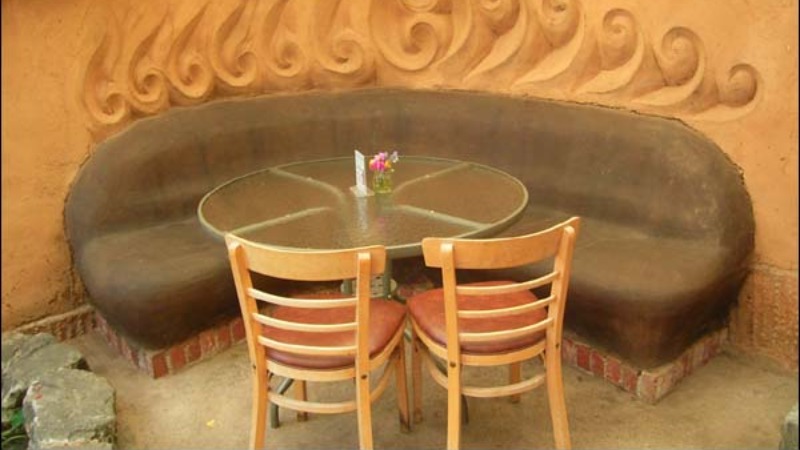
The Bramble and Bean Cafe was always intended to embody the ecological values of Alora Ecovillage in both form and function. The building itself would have been constructed using sustainable natural building methods and environmentally conscious design principles. Reclaimed wood, natural stone, earthen plasters, passive solar heating, rainwater harvesting systems, and renewable energy integration would all have contributed to a low-impact, eco-friendly structure designed to harmonize with the surrounding landscape rather than dominate it.
Large windows would have allowed natural light to fill the interior throughout the day, reducing energy use while connecting visitors visually to gardens, walking trails, and community gathering areas outside. Outdoor seating shaded by native trees and climbing vines would have encouraged people to linger, socialize, and enjoy the slower pace of village life.
The café would also have served as a visible example of how sustainable architecture can feel inviting, artistic, and deeply human rather than sterile or overly technological.
Fair Trade Coffee and Farm-Fresh Ingredients
Food and drink at the Bramble and Bean Cafe would have reflected the community’s commitment to ethical sourcing, local agriculture, and handcrafted quality. Fair trade coffee would have been a central feature, supporting small-scale coffee growers while aligning with Alora’s broader values of economic fairness and ecological responsibility.
Smoothies and seasonal beverages would have incorporated fruits, herbs, and vegetables grown directly on the village farm and in the community gardens whenever possible. Fresh berries, greens, medicinal herbs, orchard fruits, and locally grown produce could all have found their way into the café menu depending on the season.
The food itself would have emphasized organic, locally sourced, made-from-scratch meals prepared with care and simplicity. Soups, fresh-baked breads, salads, vegetarian dishes, herbal teas, and seasonal specialties would have created a menu rooted in nourishment rather than industrialized convenience food.
Rather than functioning as a high-turnover commercial restaurant, the café was envisioned as a place where food preparation remained connected to the land, the seasons, and the people preparing it.
Music, Poetry, and Creative Expression

One of the defining features of the Bramble and Bean Cafe was its planned small acoustic stage dedicated to live music performances, poetry readings, storytelling events, and intimate community gatherings.
Unlike large commercial venues designed primarily for entertainment sales, this stage was intended to support local creativity and cultural exchange. Resident musicians, traveling folk artists, poets, and storytellers could perform in an environment that encouraged attentiveness, conversation, and shared experience.
Acoustic folk music, Celtic sessions, singer-songwriter nights, spoken word events, and seasonal storytelling gatherings would all have fit naturally into the atmosphere of the café. During festivals or market days, the Bramble and Bean Cafe could also serve as a quieter companion venue to the larger outdoor solar stage nearby, offering more intimate performances and community conversations.
The café would have helped reinforce one of Alora Ecovillage’s core ideas: that sustainability is not only about energy systems and food production, but also about preserving culture, creativity, and meaningful human interaction.
A Different Kind of Village Economy
The Bramble and Bean Cafe also represented a different approach to local economics. Rather than separating commerce from community life, the café would have functioned as part of a larger cooperative ecosystem connected to the artisan market, village gardens, seasonal festivals, and performance spaces.

Residents producing baked goods, herbal products, handmade ceramics, art, or produce could potentially contribute directly to the café environment. Local musicians performing at nearby events could gather there before and after shows. Visitors attending the monthly Artist’s Market or seasonal festivals would naturally flow through the café as part of the larger community experience.
In this way, the Bramble and Bean Cafe was envisioned not as an isolated business, but as one interconnected element within the living social fabric of Alora Ecovillage.
More Than a Café
Although Bramble and Bean Cafe never physically came into existence, it remains one of the clearest examples of the broader Alora vision as a place where sustainability, artistry, local food, ecological design, and human connection could exist together naturally.
The dream behind the café was never merely about coffee or food. It was about creating spaces where people felt grounded, inspired, and connected both to one another and to the land around them. In a fast-paced and increasingly disconnected world, the Bramble and Bean Cafe represented the possibility of slowing down long enough to build genuine community again.
Share your thoughts in the comments below!
Do you share our vision of an intentional community based on the arts? What do you think it would take to achieve critical mass for such a community? Contact us and let us know!