
The Community Garden at Alora Ecovillage
The community garden at Alora Ecovillage would have been the heart and soul of the settlement. Alora Ecovillage believed that healthy communities must reconnect people not only with one another, but also with the land that sustains them. Few places embodied that philosophy more directly than the planned community garden, which was intended to serve as both a practical food source and a living symbol of cooperation, sustainability, and ecological stewardship.
The community garden was imagined as one of the foundational systems supporting everyday life within Alora Ecovillage. It would have been a productive, evolving permaculture installation where food production, education, creativity, and community interaction all came together naturally.
In many ways, the garden represented the heart of the ecovillage itself.
A Garden Built on Permaculture Principles
The design of the community garden was heavily influenced by permaculture, an ecological design philosophy centered around working with natural systems rather than attempting to dominate them. Instead of relying heavily on industrial agriculture methods, synthetic fertilizers, or monoculture growing practices, Alora’s garden spaces would have emphasized biodiversity, soil regeneration, water conservation, and long-term sustainability.
Raised beds, companion planting, natural mulching systems, composting, rainwater harvesting, and food forests would all likely have played important roles in the garden’s development. Perennial plants, medicinal herbs, pollinator-friendly flowers, fruit trees, and seasonal vegetables would have been integrated together to create a resilient and productive ecosystem rather than isolated rows of crops.
The goal was not simply to grow food, but to create a healthy relationship between people and the environment around them.
Rather than treating the land as a resource to be exploited, the community garden was designed to function as a partnership between the village and the natural world.
Shared Responsibility and Cooperative Living
One of the defining ideas behind the community garden was shared participation. Gardening and food production were intended to become collective community activities rather than isolated individual chores.

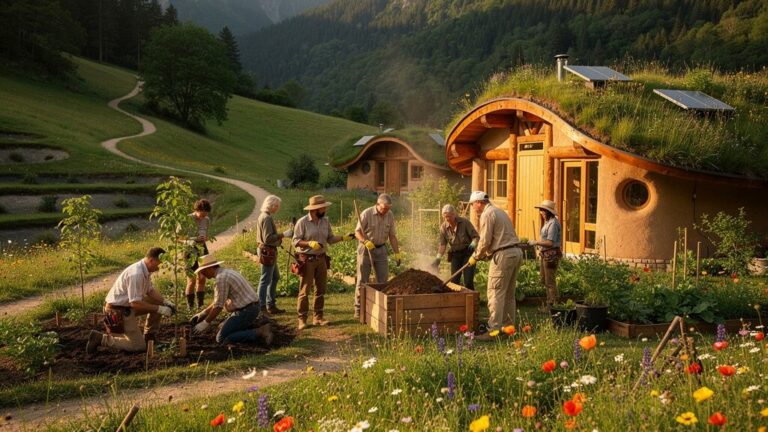
Residents of Alora Ecovillage could work together to plant, maintain, harvest, and expand the gardens throughout the year. Some residents might specialize in seed saving, while others focus on compost systems, irrigation, herbal cultivation, greenhouse management, or food preservation. In this way, the garden became not only a source of food but also a source of shared purpose and cooperation.
Children growing up within the community would also have opportunities to participate in gardening from an early age. Rather than learning about ecology only through books or classrooms, they could gain hands-on experience planting seeds, tending soil, harvesting vegetables, and observing seasonal cycles directly.
This practical connection to the land was seen as an essential part of the educational philosophy behind Alora Ecovillage.
The community garden also reinforced one of the project’s larger goals: reducing dependence on fragile industrial food systems by increasing local resilience and self-sufficiency.
Food Production and Seasonal Living
The vision for the community garden extended beyond simple vegetable production. The gardens were intended to support a broader culture of seasonal living rooted in local food, shared meals, and sustainable agriculture.
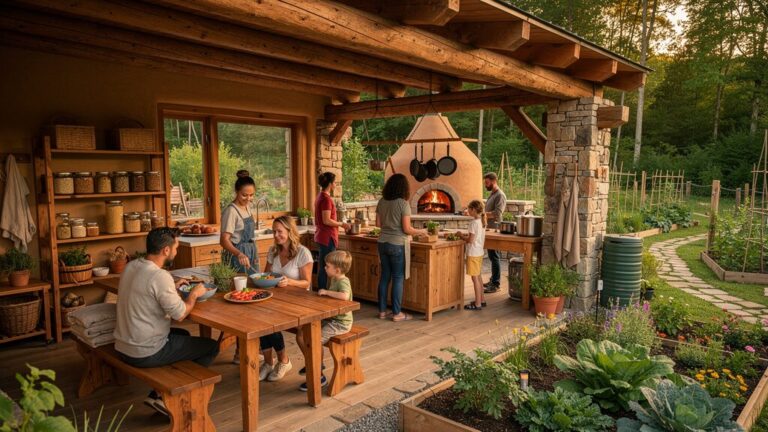
Residents could harvest fresh produce for communal kitchens, the Bramble and Bean Cafe, seasonal festivals, and eventually the planned farmer’s market connected to the village artisan market. Fresh greens, tomatoes, beans, root vegetables, berries, herbs, squash, orchard fruits, and edible flowers would all potentially become part of the local food system.
Food preservation methods such as canning, drying, fermentation, and root cellaring could also help extend the harvest through colder seasons.
Rather than expecting every resident to become fully self-sufficient individually, Alora’s model emphasized interdependence and cooperation. The community garden was one piece of a larger ecological and social network designed to strengthen the resilience of the village as a whole.
A Space for Beauty and Reflection
Although food production was a central purpose of the community garden, beauty and emotional well-being were considered equally important.
The gardens were envisioned as peaceful and aesthetically rich environments filled with pathways, flowers, native plants, seating areas, and natural gathering spaces. Residents could walk through the gardens not only to work, but also to relax, meditate, socialize, or reconnect with nature after busy days.
Pollinator gardens filled with bees, butterflies, birds, and medicinal plants would help support biodiversity while also creating spaces that felt alive and inspiring. Art installations, handcrafted benches, trellises, and natural stone features could eventually become integrated throughout the garden areas as the community evolved.
Like many aspects of Alora Ecovillage, the community garden was designed to nourish both practical and emotional needs simultaneously.
Sustainability Beyond Technology
One of the ideas that made Alora Ecovillage different from many modern sustainability projects was its recognition that ecological living is not simply about technology. Solar panels, renewable energy systems, and efficient buildings matter, but true sustainability also requires rebuilding human relationships with land, food, labor, and community.
The community garden represented that deeper philosophy.
Gardening together creates rhythms of cooperation and mutual dependence that are difficult to replicate through purely technological solutions. Seasonal planting, shared harvests, compost cycles, and collective care for the land naturally encourage patience, responsibility, and long-term thinking.
These values were central to the broader vision behind Alora Ecovillage.
A Living Symbol of the Alora Vision
Although Alora Ecovillage itself was never fully realized, the vision behind the community garden remains one of the clearest examples of what the project hoped to achieve: a sustainable, cooperative, creative community rooted in ecological awareness and meaningful human connection.
The garden was intended to be more than a food source. It was imagined as a living commons where residents could gather, work, learn, celebrate, and reconnect with the natural systems that support life itself.
In many ways, the community garden symbolized the larger dream of Alora as a different way of living based not on endless consumption and isolation, but on stewardship, cooperation, and belonging.
Share your thoughts in the comments below!
Do you share our vision of an intentional community based on the arts? What do you think it would take to achieve critical mass for such a community? Contact us and let us know!