Cooperative Living Areas at Alora Ecovillage
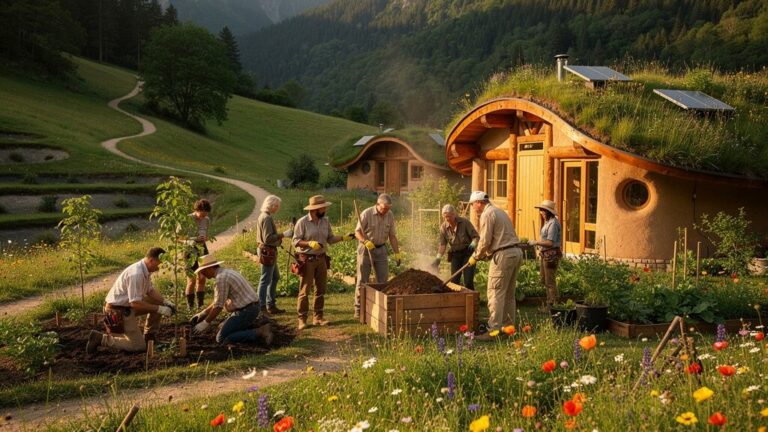
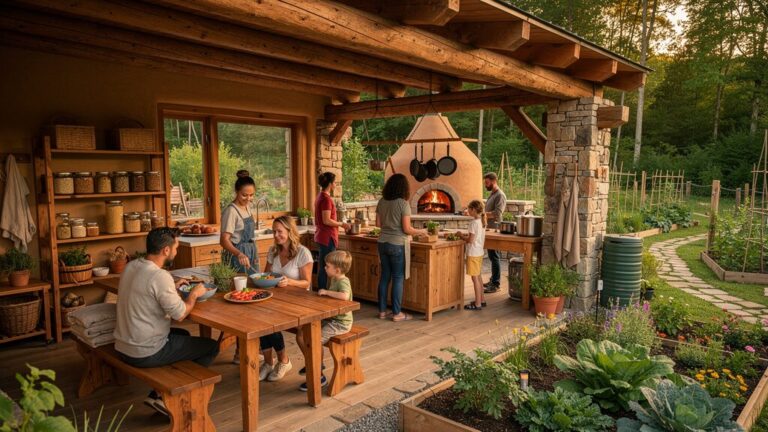
At the heart of Alora Ecovillage was a guiding intention that shaped every design decision, building plan, and landscape feature: the belief that human beings thrive most fully when they live in connection with one another and with the natural world. The concept of cooperative living was not limited to shared kitchens or communal workspaces. It extended into the land itself, shaping how people moved through space, gathered, reflected, created art, and experienced daily life.
Rather than separating nature, art, spirituality, and community into isolated zones, Alora envisioned a fully integrated landscape where everyday movement became part of a larger living experience. Paths were not just transportation routes; they were invitations. Gathering spaces were not just functional; they were reflective and expressive. Even silence had a place in the design of the village.

The Walkable Labyrinth
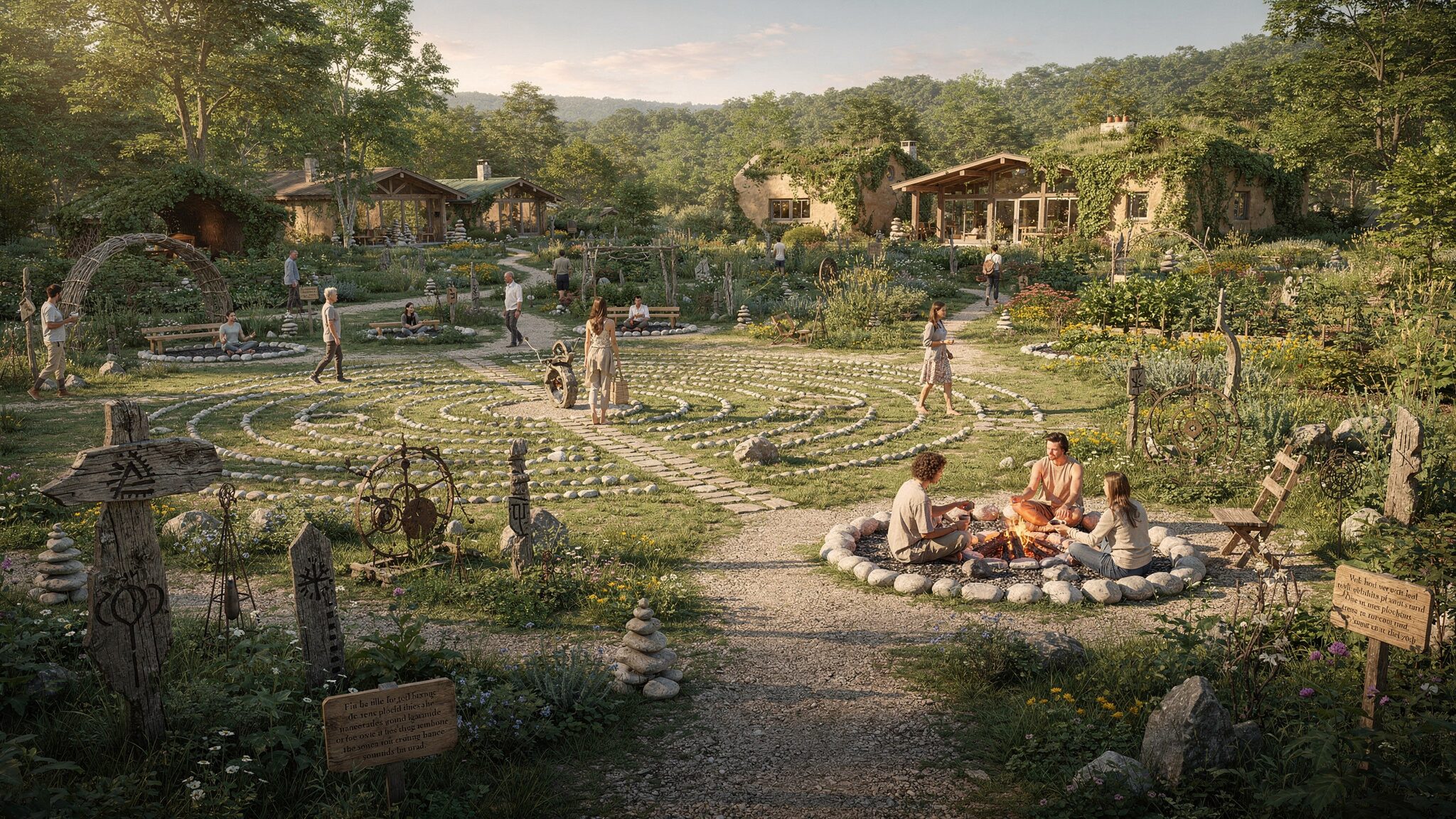
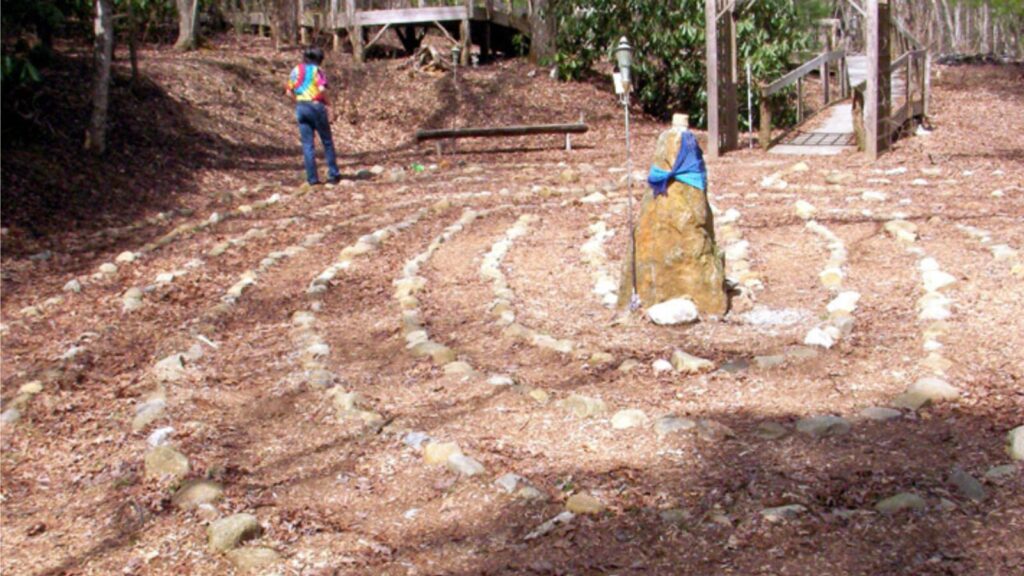
One of the most distinctive planned features of Alora Ecovillage was the walkable labyrinth. Unlike a maze, which is designed to confuse, a labyrinth is a single winding path intended for contemplation and mindfulness. The Alora labyrinth was envisioned as a central meditative feature where residents could slow down, reflect, and reconnect with themselves.
Constructed from natural stone, gravel, and embedded earth materials, the labyrinth would be integrated into a landscaped clearing surrounded by native plants and trees. Walking the labyrinth was not about arriving quickly at a destination, but about experiencing the journey itself.
Residents might walk the labyrinth during moments of stress, transition, grief, celebration, or simple reflection. It would serve as a grounding space within the broader rhythm of cooperative living, reminding participants that life in community includes both outward action and inward awareness.
Shared Meditative Spaces
In addition to the labyrinth, Alora Ecovillage included several shared meditative areas scattered throughout the property. These were intentionally designed as quiet zones where individuals or small groups could sit, breathe, and reflect without interruption.
These spaces might include:
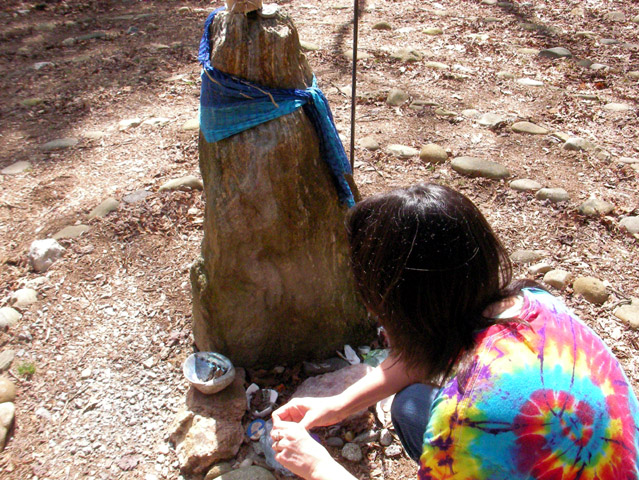
- Forest meditation clearings
- Stone circle seating areas
- Covered open-air pavilions
- Water-adjacent reflection zones near ponds or streams
- Quiet garden alcoves with benches and native plantings
The goal was not to impose a single spiritual practice, but to create environments that supported many forms of contemplation. Some residents might meditate in silence, others might journal, pray, or simply sit and observe nature.
These meditative environments reinforced the idea that cooperative living is not only about shared labor and resources, but also about respecting shared space for solitude and inner life.
The Sculpture Garden
Art was never intended to be confined to buildings or galleries at Alora Ecovillage. Instead, it was envisioned as something woven directly into the landscape. The sculpture garden would have been one of the most visible expressions of this philosophy.

Located along gently winding paths, the sculpture garden would feature rotating installations created by residents, visiting artists, and community collaborations. Sculptures might be made from wood, stone, metal, reclaimed materials, or living plants trained into artistic forms.
The garden would change over time, reflecting the evolving creative energy of the community. Some pieces might be permanent landmarks, while others would be seasonal or temporary, giving the space a sense of continuous renewal.
Walking through the sculpture garden would feel like moving through a living museum of community expression, where art and environment were inseparable.
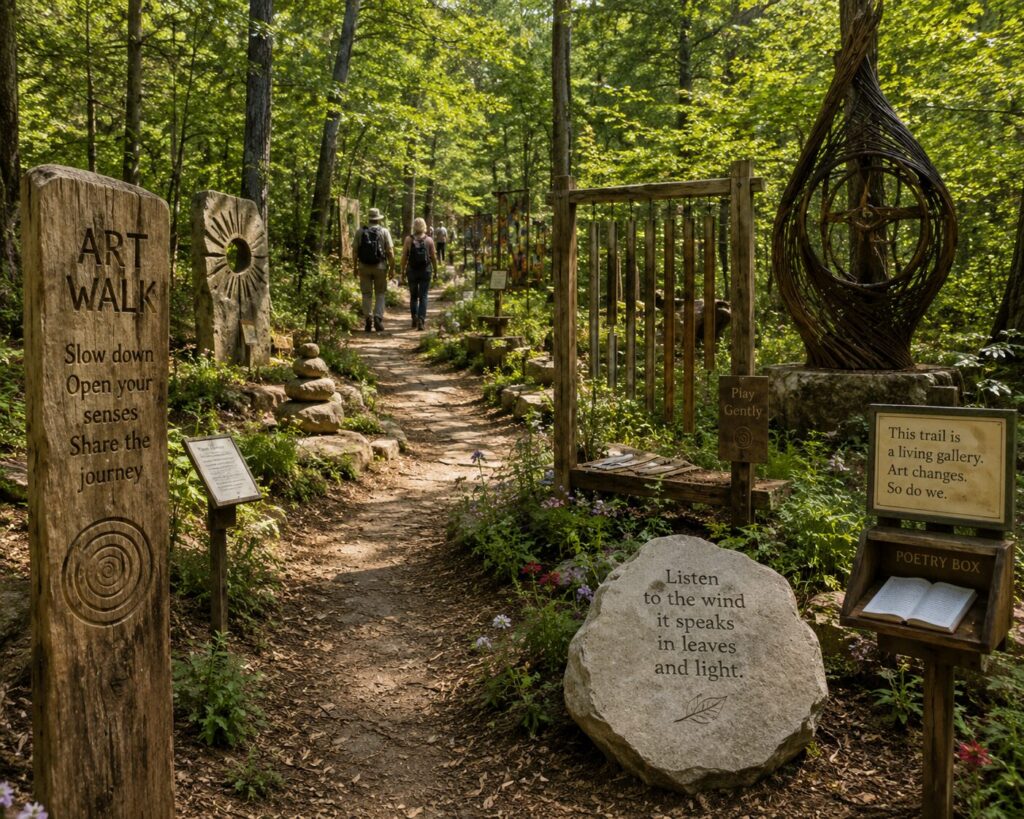
Hiking Trails as Art Walks
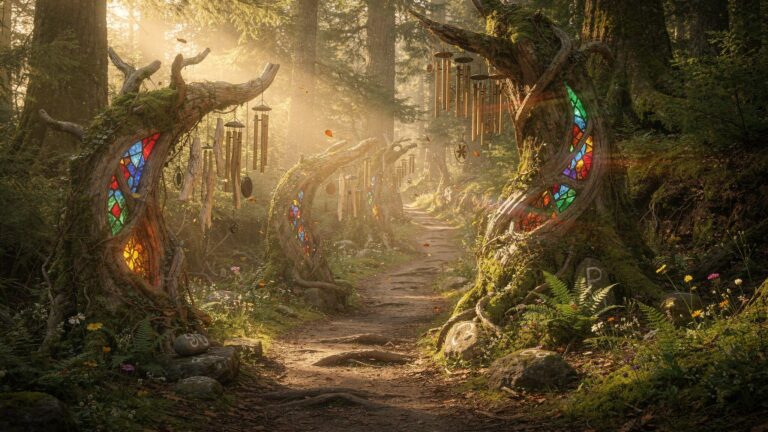
One of the most unique aspects of Alora Ecovillage was the concept of hiking trails that doubled as art walks. Instead of treating trails as purely functional pathways for movement through the land, they were designed as immersive cultural experiences.
Along these trails, residents and visitors would encounter:
- Eco-art installations
- Carved wooden markers and storytelling stations
- Stone arrangements and natural sculptures
- Poetry plaques and written reflections
- Musical or acoustic interaction points
- Seasonal or rotating art displays
These trails encouraged people to slow down, observe, and engage with both nature and human creativity. A simple walk through the forest became an unfolding experience of discovery and reflection.
In this way, the landscape itself became part of the community’s artistic identity, reinforcing the principles of cooperative living by making shared cultural expression accessible to everyone.
Communal Fire Circles and Gathering Spaces
Another important feature of Alora Ecovillage was the inclusion of communal fire circles scattered throughout the property. These circular gathering spaces, built from natural stone, were designed for storytelling, music, seasonal ceremonies, and informal social gatherings.
Fire has long played a central role in human community life, and Alora intended to preserve that tradition sustainably and intentionally. Residents might gather around fire circles for evening music, community discussions, storytelling nights, or seasonal celebrations tied to solstices and harvests.
These spaces naturally encouraged conversation, connection, and shared experience, reinforcing the deeper rhythms of cooperative living.
Quiet Infrastructure of Connection
Beyond the more visible features like trails and gardens, Alora Ecovillage also envisioned subtle connective elements throughout the landscape. These included shaded walking paths, resting benches placed at intervals, natural wayfinding markers, and small gathering nooks where people could pause and meet organically.
Even transitions between buildings were designed to feel meaningful rather than purely functional. Moving from the kitchen to the garden, or from the council house to the yoga studio, was intended to feel like moving through a living, interconnected system rather than a collection of separate structures.
A Living System of Shared Experience
What ultimately defined the cooperative living areas of Alora Ecovillage was not any single feature, but the integration of all these elements into a unified experience. The labyrinth, sculpture garden, hiking art trails, meditative spaces, and gathering areas were all part of a larger ecological and social design philosophy.
Together, they reflected a vision of cooperative living where people shared not only resources and responsibilities, but also beauty, silence, creativity, and connection to the land.
Although Alora Ecovillage was never physically realized, the ideas behind these spaces continue to offer an alternative way of imagining community life where the landscape itself becomes a partner in human experience, and where living together means engaging with both nature and one another in thoughtful, creative, and meaningful ways.
Share your thoughts in the comments below!
Do you share our vision of an intentional community based on the arts? What do you think it would take to achieve critical mass for such a community? Contact us and let us know!