Eco-Art Installations Along the Trails at Alora Ecovillage
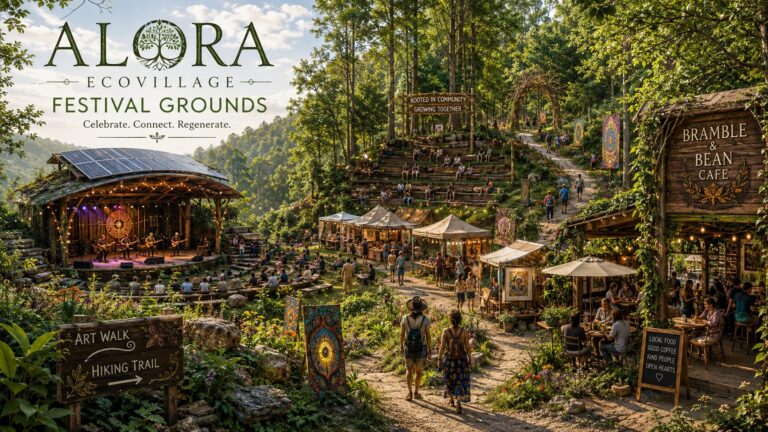
One of the most distinctive and imaginative features of Alora Ecovillage was the integration of eco-art installations along its walking trails. Rather than treating the landscape as something separate from culture or creativity, the design of the ecovillage envisioned the entire trail system as a living gallery. It would have been a continuous, evolving expression of art, ecology, and community values.
These installations were not meant to be decorative additions placed randomly in nature. Instead, they were carefully considered interventions designed to deepen awareness of the environment, encourage reflection, and transform ordinary walks into meaningful experiences. As residents and visitors moved through the forest paths, meadows, and garden corridors, they would encounter artistic expressions that invited them to slow down, observe, and engage with both the natural world and human creativity.
At its core, the eco-art trail system reflected a central philosophy of Alora Ecovillage: that art, nature, and daily life should not be separated, but woven together into a shared experience of place.
A Living Outdoor Gallery
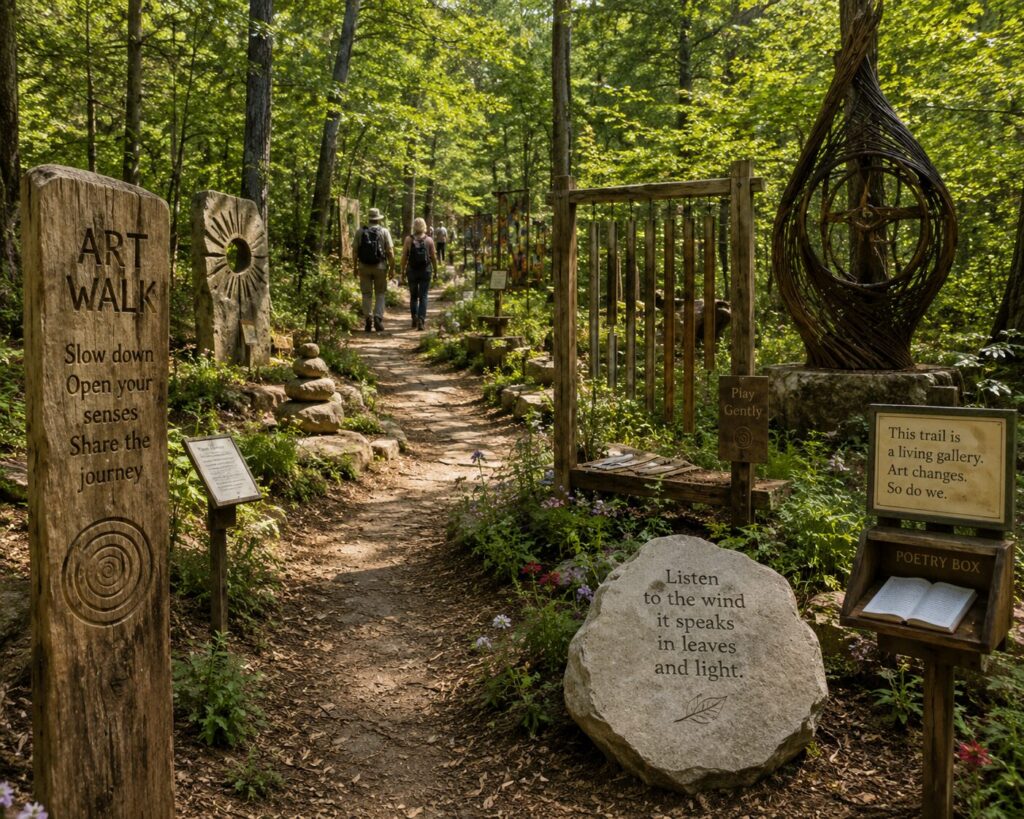
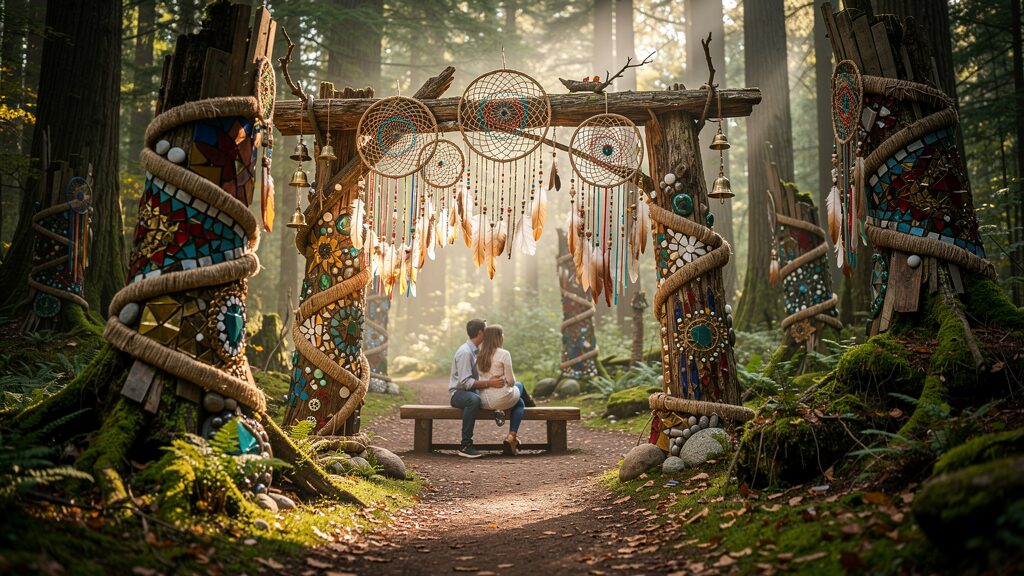
The eco-art installations along the trails were envisioned as a constantly evolving outdoor gallery. Unlike traditional museums, there would be no fixed walls, no single entrance, and no static exhibitions. Instead, the entire landscape functioned as the gallery space itself.
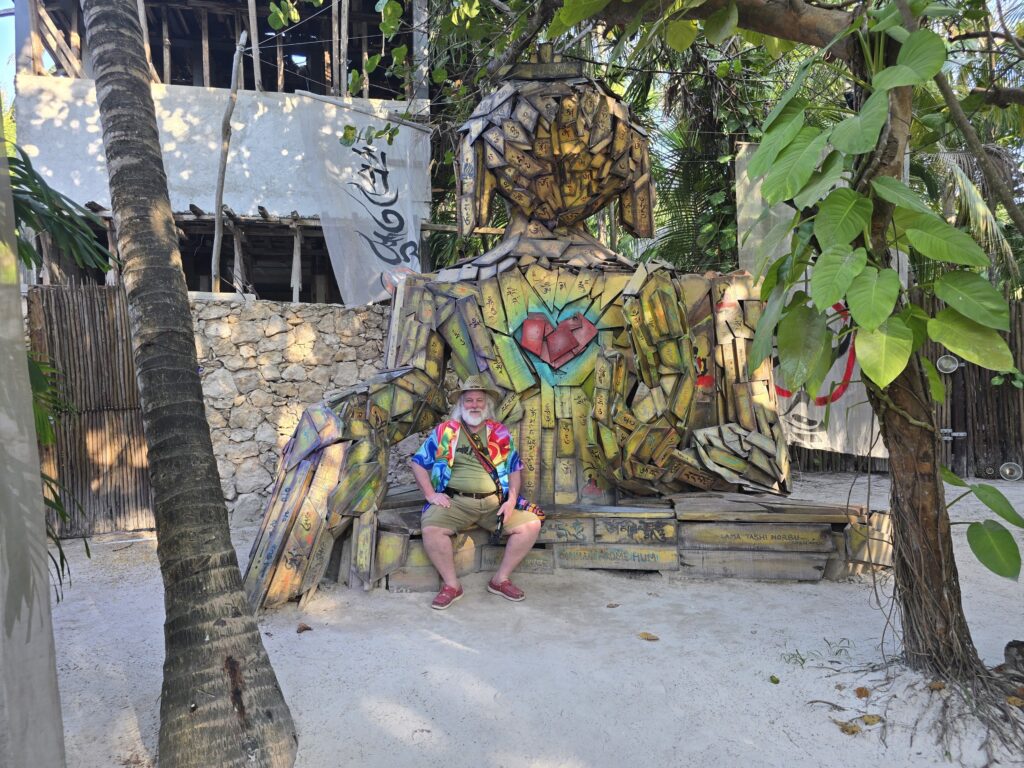
Artworks might appear in clearings, along bends in the trail, beside streams, or nestled within forest edges. Some pieces would be permanent, created from durable natural materials like stone, wood, or metal, designed to weather gracefully over time. Others would be temporary, seasonal, or even ephemeral and built from leaves, branches, ice, flowers, or other organic materials that would eventually return to the earth.
This cyclical nature of creation and decay was intentional. It reflected ecological processes and reinforced the idea that change is not something to resist, but something to observe and learn from.
Types of Eco-Art Installations
The eco-art installations along Alora’s trails were envisioned as diverse and interactive, encouraging multiple forms of engagement. These included:
Carved Wooden Markers and Story Stations
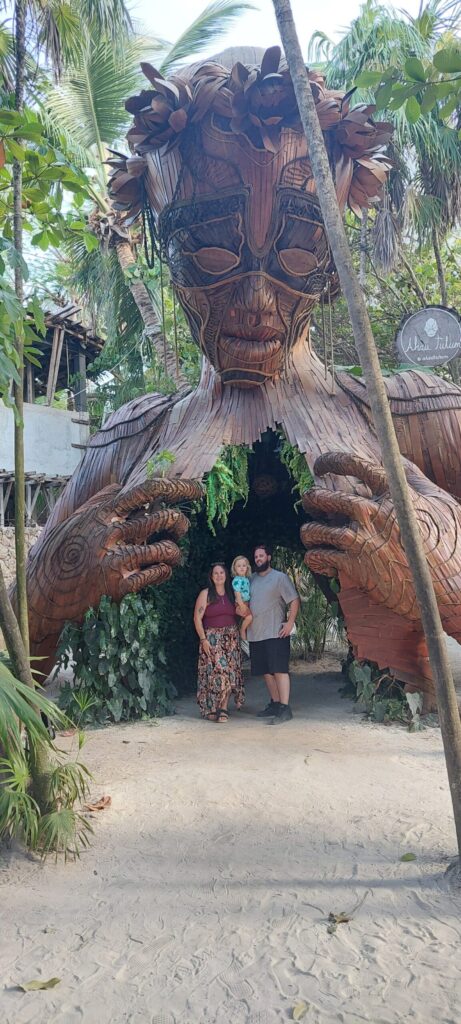
Hand-carved wooden posts and panels would line sections of the trail, each one telling a story, sharing a poem, or offering reflections on nature, community, or mindfulness. Some might include local folklore, while others would feature original writings from residents or visiting artists.
Stone Arrangements and Natural Sculptures
Carefully placed stones, rock cairns, and sculptural formations would blend seamlessly into the environment. Some pieces would echo ancient traditions of land art, while others would be more contemporary interpretations of balance, symmetry, and natural form.
Poetry Plaques and Written Reflections
Discreet plaques embedded into stone, wood, or metal would offer short poems, meditations, or philosophical reflections. These would be placed intentionally in quiet areas where walkers could pause and read without distraction.
Musical and Acoustic Interaction Points
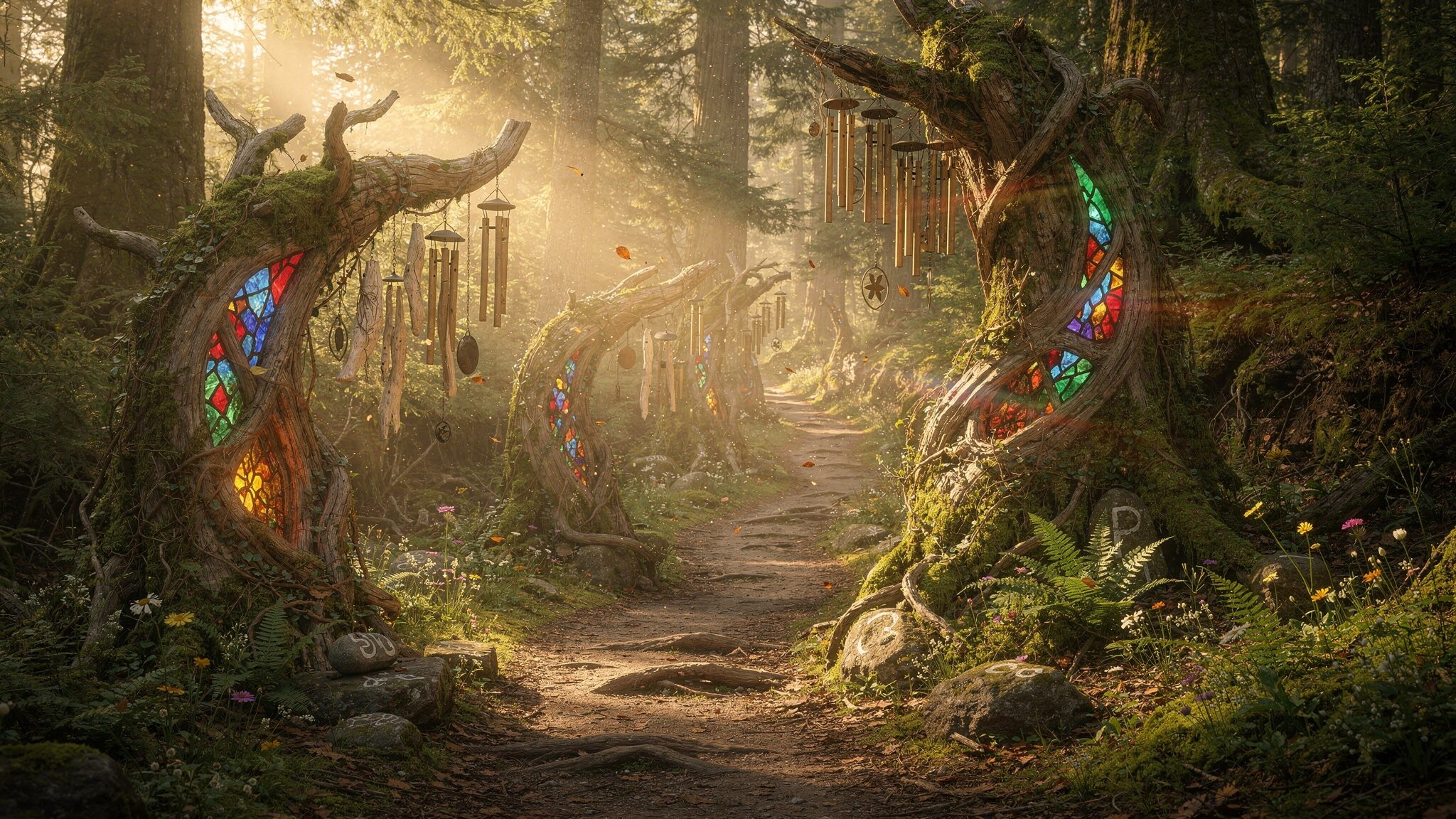
Certain installations were envisioned as interactive sound-based experiences. These might include wind chimes made from natural materials, resonant wooden structures, or simple percussion elements that visitors could gently play as they passed.
Seasonal and Rotating Art Displays
Some installations would change throughout the year, reflecting seasonal cycles. Spring might bring flower-based installations and living plant structures, while autumn could feature leaf-based mosaics or harvest-themed arrangements. Winter installations might incorporate ice, wood, and bare natural forms, emphasizing stillness and reflection.
Encouraging Mindful Movement Through the Landscape
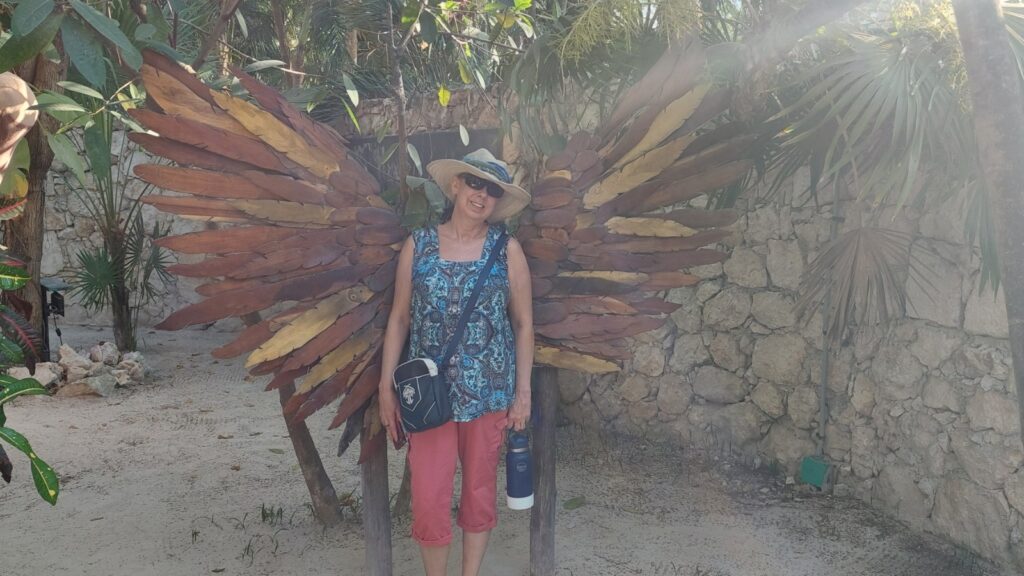
One of the most important goals of the eco-art trail system was to change the way people moved through nature. Instead of rushing from one destination to another, the presence of art encouraged walkers to slow down, become more observant, and engage more deeply with their surroundings.
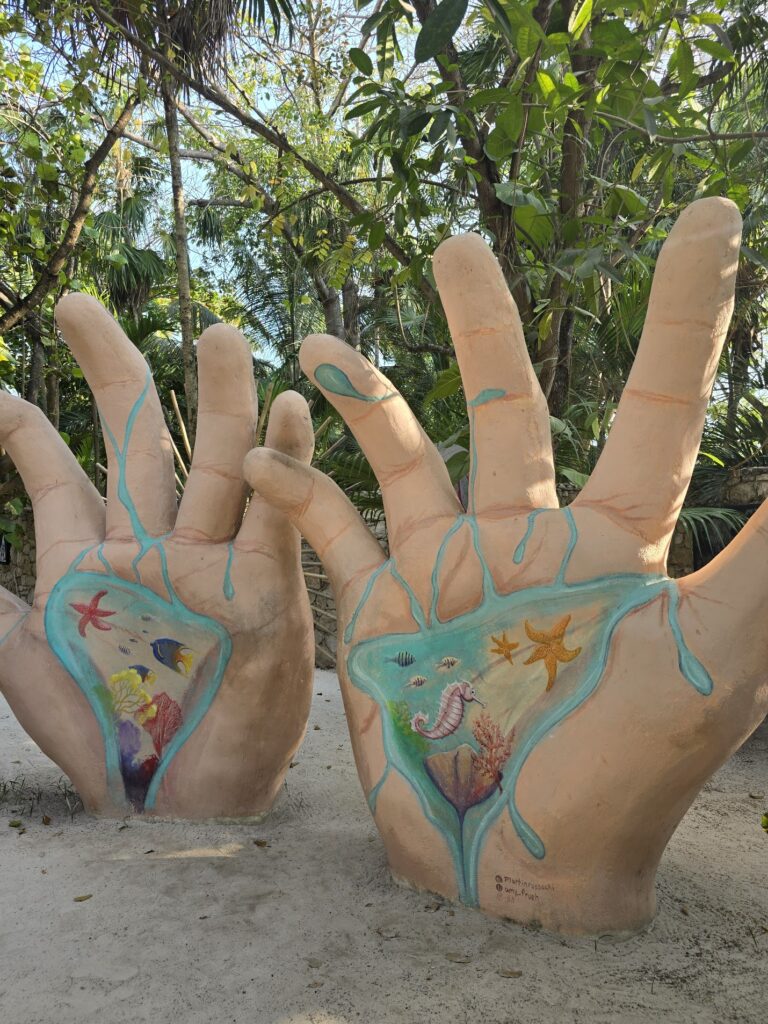
A simple hike became an unfolding journey of discovery. A bend in the trail might reveal a hidden sculpture. A quiet clearing might contain a poem carved into stone. A forest edge might echo with soft, natural sounds created by wind interacting with carefully placed materials.
This experience was designed to shift attention away from speed and productivity and toward presence and awareness.
In doing so, the trails supported not only artistic appreciation but also emotional well-being and mindfulness.
Art Rooted in Ecology
Unlike urban galleries or indoor exhibitions, the eco-art installations at Alora Ecovillage were inseparable from their ecological context. Artists were encouraged to work with natural materials and consider the environmental impact of their creations.
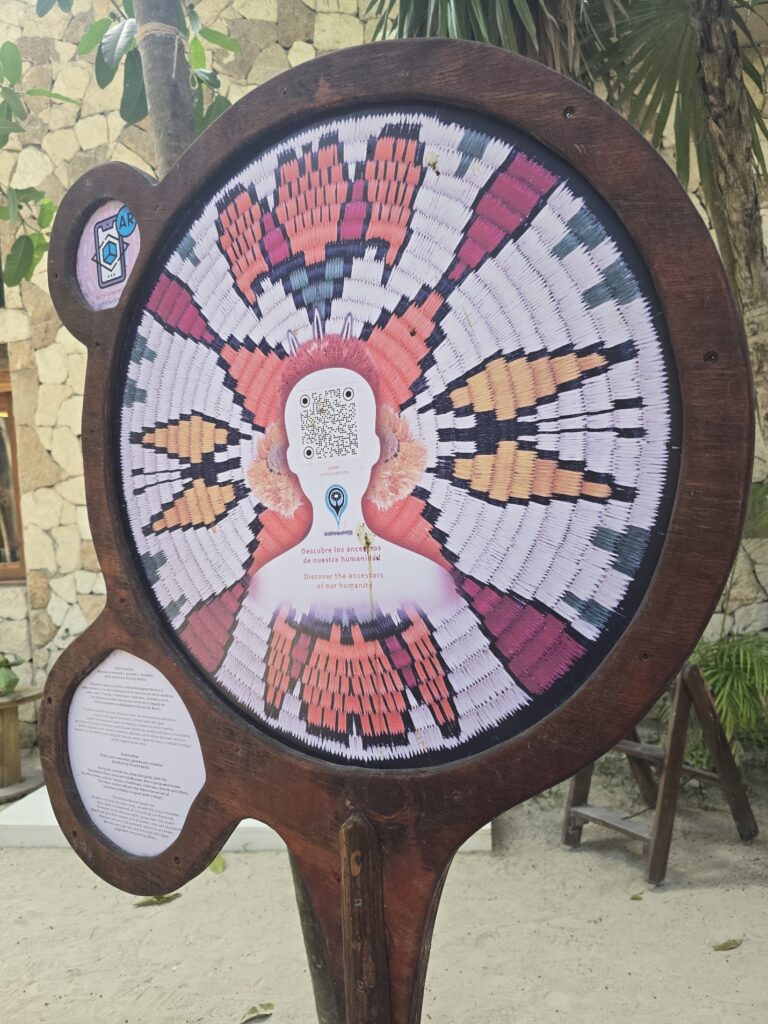
Many installations would use:
- Fallen wood and reclaimed timber
- Locally sourced stone
- Clay, earth, and natural pigments
- Living plants and vines
- Recycled or repurposed materials
This approach ensured that art did not exist in opposition to nature but emerged from it. The land itself became both the medium and the collaborator.
Over time, installations would weather, grow, decay, and transform, reinforcing the idea that art is a living process rather than a static object.
A Reflection of Cooperative Living
The eco-art trail system also reflected the broader social philosophy of Alora Ecovillage. By making art accessible in shared public spaces, creativity was democratized. It was not confined to galleries, private studios, or commercial markets alone.
Instead, artistic expression became part of everyday communal life. Residents, visitors, and children could all encounter art as they moved through the village, regardless of background or training.
This reinforced a culture of cooperative living, where shared experience, collective creativity, and mutual appreciation were valued as essential parts of community life.
A Landscape That Tells a Story
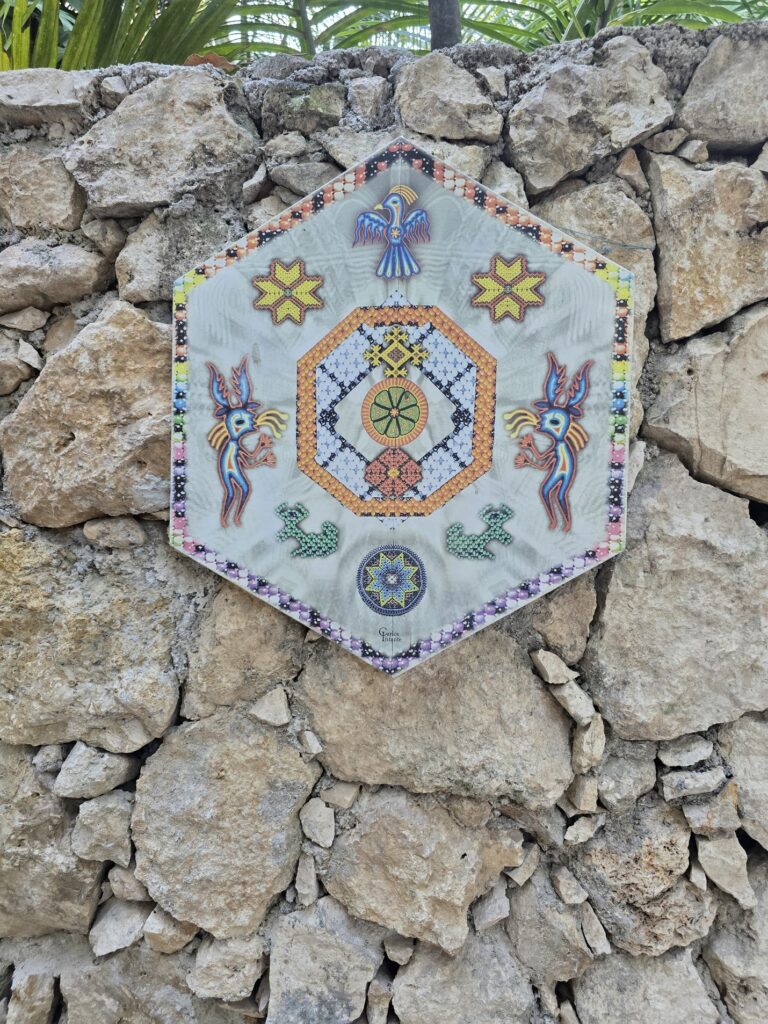
Ultimately, the eco-art installations along the trails would have transformed Alora Ecovillage into a narrative landscape. It would have been a place where the environment itself told a story. That story was one of connection: between people and nature, between art and ecology, between individual reflection and collective experience.
Although Alora Ecovillage was never physically realized, the vision of its eco-art trails remains a powerful example of how human creativity can be integrated into natural landscapes in ways that are thoughtful, sustainable, and deeply meaningful.
In this vision, walking through the forest is an encounter with art, with nature, and with the shared imagination of a community trying to live more closely aligned with the living world.
Share your thoughts in the comments below!
Do you share our vision of an intentional community based on the arts? What do you think it would take to achieve critical mass for such a community? Contact us and let us know!