
Ecological Land Stewardship Systems at Alora Ecovillage
At Alora Ecovillage, the idea of “ownership” of the land gives way to something older and deeper: stewardship. The goal is not merely to live on the land, but to participate in a reciprocal relationship with it. In this vision of ecological living, human beings are not separate from nature, nor masters over it, but members of a larger living community that includes forests, waterways, wildlife, soil systems, and future generations.
The concept of caretaking is central to the design philosophy of Alora Ecovillage. Every pathway, garden, building material, and agricultural practice would be evaluated according to one essential question: Does this practice regenerate the land, or deplete it?
A healthy ecological community requires reciprocity. That means putting back at least as much as we take from the land.
A Living Relationship
Modern industrial society often treats land as a commodity. Forests become lumber inventories. Rivers become drainage systems. Soil becomes a production medium for chemical agriculture. In contrast, permaculture recognizes the land as a living system with intrinsic value.
At Alora Ecovillage, this would involve daily practices that restore ecological balance while meeting human needs responsibly. Residents would not simply consume resources; they would actively participate in renewing them.
This philosophy draws inspiration from Indigenous ecological traditions, permaculture ethics, regenerative agriculture, and bioregional thinking. Instead of asking, “How much can we take?” Alora Ecovillage asks, “How can we give back?”
That principle changes everything from farming practices to architecture.
Stewardship Through Regenerative Agriculture

One of the clearest expressions of this concept is how food is grown. Conventional industrial farming often strips nutrients from the soil faster than nature can replenish them. Over time, this leads to erosion, biodiversity loss, and dependence on synthetic fertilizers.
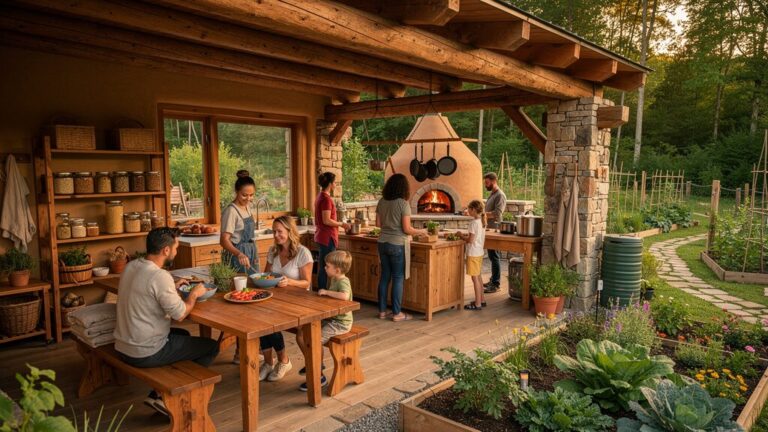
Alora Ecovillage would instead use regenerative agricultural systems designed to build soil health over time. These methods might include:
- Composting food and plant waste back into the soil
- Crop rotation and polyculture planting
- Food forests modeled after natural ecosystems
- Minimal tillage practices
- Rainwater harvesting and water conservation
- Nitrogen-fixing plants that naturally restore fertility
- Rotational grazing systems for livestock
In a true permaculture model, the health of the soil would improve each year rather than decline.
This approach recognizes that fertile land is borrowed from future generations.
Reciprocity and Ethics
The principle of reciprocity lies at the heart of sustainability. Every act of taking from the land carries an ethical responsibility to restore, replenish, or protect.
If trees are harvested for natural building materials, new trees should be planted. If gardens produce food, compost, and organic matter should be returned to the earth. If water is drawn from the watershed, systems should be in place to protect water purity and groundwater recharge.
This mindset moves beyond sustainability into regeneration.
Sustainability asks how humans can maintain current systems without collapse. Reciprocity asks how humans can actively heal ecological systems damaged by centuries of exploitation.
At Alora Ecovillage, this principle would not be viewed as a restriction or sacrifice. It would be part of a meaningful relationship with place. Residents would ideally understand themselves not as consumers of the land, but caretakers within it.

Stewardship in Natural Building Practices
Buildings themselves can either support or damage ecological systems. Modern construction often relies heavily on concrete, plastics, toxic chemicals, and energy-intensive manufacturing processes.
A permaculture-centered ecovillage would instead prioritize natural and low-impact building methods whenever possible. These could include:
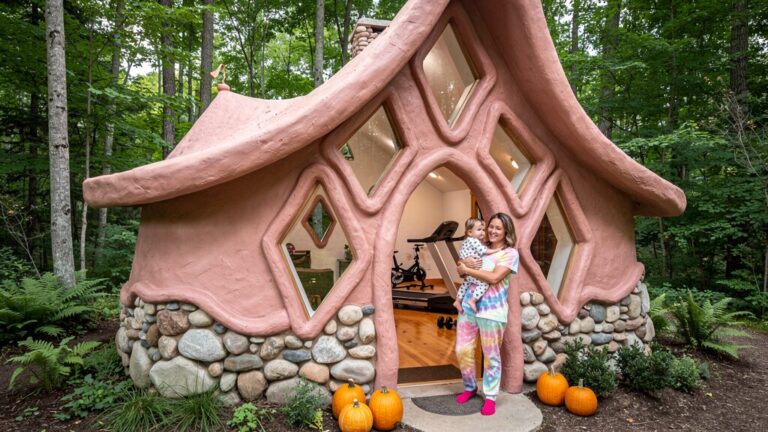
- Cob construction
- Straw bale insulation
- Timber framing from responsibly harvested wood
- Earthen plasters
- Passive solar design
- Reclaimed and recycled materials
- Tiny homes with smaller ecological footprints
The idea is not to reject technology entirely, but to align technology with ecological wisdom.
A permaculture approach asks whether homes can become integrated parts of the ecosystem rather than impositions upon it.
For example, buildings might be positioned to preserve old-growth trees, maximize natural sunlight, reduce heating needs, and minimize disruption to wildlife habitats.
Community Stewardship and Shared Responsibility
One of the challenges of modern society is that responsibility for land is often fragmented and isolated. Ecovillages create opportunities for collective stewardship.
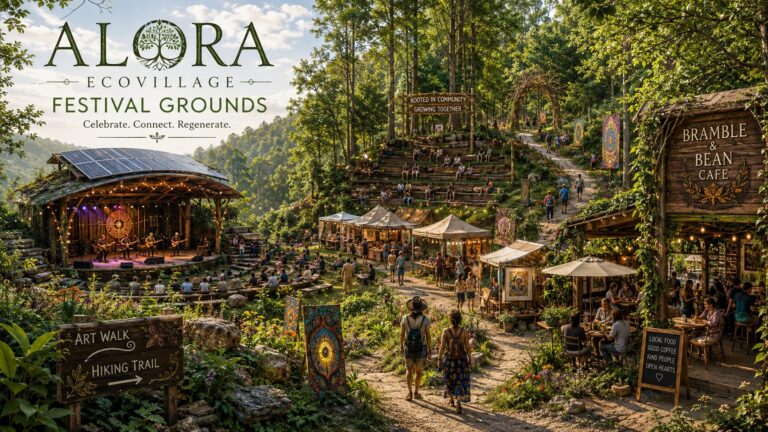
At Alora Ecovillage, shared responsibility would ideally become part of the community culture itself. Residents might participate together in:
- Forest restoration projects
- Trail maintenance
- Wildlife habitat protection
- Native species planting
- Watershed conservation
- Shared gardens and orchards
- Educational workshops on ecological literacy
Children growing up in such a community would learn stewardship not merely as an abstract environmental concept, but as a lived daily practice.
They would see firsthand that human beings can participate positively in ecosystems rather than simply exploiting them.
The Spiritual Dimension of Stewardship
For many people, stewardship is not only ecological but spiritual. Nature becomes more than scenery or resources; it becomes a source of connection, meaning, and belonging.
The practice of reciprocity fosters humility. Human beings begin to understand that they depend upon healthy forests, pollinators, fungi, clean water, fertile soil, and stable climates for survival.
This awareness naturally encourages gratitude.
At Alora Ecovillage, stewardship could include ceremonies, seasonal gatherings, mindfulness practices, and ecological rituals that honor humanity’s relationship with the living earth.
Such practices help cultivate emotional and spiritual investment in protecting the land for future generations.

Why Stewardship Matters for the Future
As climate instability, biodiversity loss, and soil depletion accelerate worldwide, communities based on stewardship may become increasingly important models for the future.
The ecological crises facing humanity are not simply technological problems. They are relationship problems. They stem from the assumption that humans can endlessly extract from nature without consequence.
Stewardship offers another path.
By practicing reciprocity and putting back at least as much as we take, communities like Alora Ecovillage can help demonstrate that human habitation does not have to mean ecological destruction.
Instead, human communities can become forces for restoration, healing, biodiversity, and resilience.
Share your thoughts in the comments below!
Do you share our vision of an intentional community based on the arts? What do you think it would take to achieve critical mass for such a community? Contact us and let us know!