
The Artist’s Market at Alora Ecovillage
One of the most important gathering spaces envisioned for Alora Ecovillage was the monthly Artist’s Market, a community-centered open-air market designed to celebrate creativity, local craftsmanship, music, sustainability, and human connection. Planned for the first Saturday of every month, the market would have served not only as an economic hub for residents but also as a cultural centerpiece where art, performance, food, and community life blended naturally.
The location itself was carefully imagined. The Artist’s Market would have stretched through a central commons area situated between the outdoor solar-powered performance stage and a cozy café and coffee shop called The Bramble and Bean Café. This placement was intentional. The market was designed to flow directly into performances, concerts, storytelling events, and seasonal festivals so that visitors attending events could also explore handcrafted goods, artisan merchandise, and locally produced food while moving through the community gathering spaces.

The goal was to create something that felt alive and not simply a shopping area. In other words, a vibrant village atmosphere where creativity and sustainability became part of everyday life.
A Monthly Artist’s Market Rooted in Community
Unlike commercial vendor events focused primarily on profit, the Artist’s Market at Alora was envisioned as a cooperative community experience. Residents of the ecovillage would have been given merchant booth spaces free of charge as part of their participation in the community. This reflected one of the central ideas behind Alora itself: that creative expression and local craftsmanship should be supported rather than treated as luxuries.
Artists, musicians, herbalists, woodworkers, potters, fiber artists, jewelry makers, leatherworkers, painters, and crafters would all have opportunities to display and sell their work in an environment specifically designed to support local creativity.

The market would also have encouraged skill-sharing and collaboration. Rather than competing with one another in a conventional retail environment, residents could exchange ideas, demonstrate techniques, and build relationships through the shared creative culture of the village.
If booth spaces remained available after residents had been accommodated, additional spaces would have been rented to members of the surrounding community. This would have allowed the Artist’s Market to grow into a bridge between Alora Ecovillage and neighboring towns, creating economic opportunities while also inviting visitors into the larger vision of sustainable, cooperative living.
The Bramble and Bean Café and Community Gathering Space
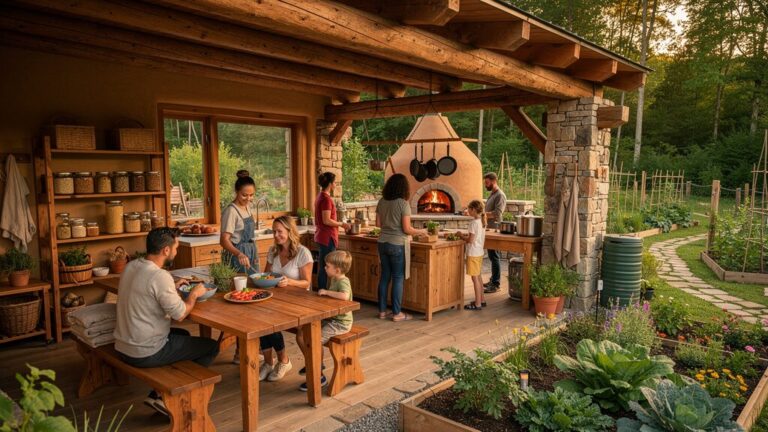
The placement of the market beside The Bramble and Bean Café was an essential part of the design. The café was imagined as a warm, welcoming community gathering place where people could sit with coffee or herbal tea, listen to live acoustic music, and enjoy locally prepared food while watching the activity of the market unfold around them.
Rather than functioning as a standard commercial coffee shop, The Bramble and Bean Café would have operated as part café, part community commons, and part artistic meeting place. Residents and visitors alike could gather there before performances, during workshops, or after market events to continue conversations and strengthen community relationships.
Large windows, outdoor seating, natural materials, and artwork created by village residents would have helped make the café itself feel integrated into the larger artistic and ecological identity of Alora Ecovillage.
The Solar Stage and Performance Culture
One of the most unique aspects of the Artist’s Market was its connection to the outdoor solar-powered stage and festival grounds. The market was intentionally designed to support performances and community celebrations.

Musicians playing concerts on the solar stage could sell albums, instruments, clothing, artwork, or handcrafted merchandise directly at nearby booths. Performers, storytellers, and artists participating in festivals would have immediate access to a supportive audience already gathered within the market environment.
This integration of performance and marketplace activity reflected Alora’s broader philosophy: creativity was not meant to be isolated into separate spaces. Music, art, craftsmanship, food, conversation, and celebration were all intended to exist together as interconnected parts of community life.
The solar stage itself symbolized the ecovillage’s emphasis on renewable energy and sustainability while also providing a venue for cultural expression.
Seasonal Festivals and the Winter Solstice Celebration
Although the monthly Artist’s Market would have operated year-round, special attention was given to seasonal festivals and holiday gatherings. The largest planned event was the annual Winter Solstice Festival, envisioned as a major community celebration centered around music, firelight, art, storytelling, food, and nature-centered traditions.
During Winter Solstice events, the market would have expanded into a larger festival village with additional vendors, musicians, seasonal decorations, lanterns, handcrafted gifts, and communal celebrations throughout the grounds.
The idea was to create an atmosphere reminiscent of old village festivals where people gathered not only to buy and sell goods, but to reconnect with one another during meaningful points in the seasonal cycle.
Other seasonal celebrations throughout the year would likely have included harvest festivals, spring gatherings, outdoor concerts, craft fairs, and permaculture workshops tied to the rhythms of the land and the changing seasons.
The Future Farmer’s Market
As the community matured, the vision also included the development of a regular farmer’s market alongside the Artist’s Market. Residents growing organic produce, herbs, mushrooms, fruit, honey, and other sustainable food products could eventually bring their harvests into the market system, helping strengthen Alora’s goal of localized food production and economic resilience.
The combination of art, music, craftsmanship, and local food production was intended to create a true village commons where people could meet many of their social, cultural, and practical needs within the community itself.
A Different Vision of Community Life
What made the Artist’s Market at Alora Ecovillage unique was that it was never intended to be merely commercial. It was envisioned as the living cultural heart of the community where creativity, sustainability, celebration, and cooperation could exist together naturally.
Even though Alora Ecovillage was never fully realized, the vision behind the market still reflects an alternative way of imagining community life: one where local creativity matters, where shared public spaces nurture connection, and where culture itself becomes part of sustainable living.
Share your thoughts in the comments below!
Do you share our vision of an intentional community based on the arts? What do you think it would take to achieve critical mass for such a community? Contact us and let us know!